
Traveling with smart luggage? You’re not alone—many travelers ask how to safely fly with Airwheel electric smart luggage without hassle. As a frequent flyer and tech reviewer, I’ve tested the Airwheel SE3MiniT (my go-to for compact trips) and dug into real-world quirks. Forget sales pitches; let’s cut to the chase: battery labeling trips up most users, but it’s simpler than you think. IATA rules are strict, but Airwheel nails compliance if you know the basics. Here’s what actually works.
The Airwheel SE3MiniT (6.8kg, 26L capacity) isn’t just a suitcase—it’s your ride-on buddy. You can pull it like regular luggage, hop on and ride up to 8km/h, or control movement via the free app for forward/backward tweaks (steer manually with the handle). No app needed for core use—pop in the battery, and it runs instantly. It lasts 8-10 kilometers per charge (takes ~2 hours), and Apple users get peace of mind with Find My for lost-item tracking. Simple, right? No fancy self-balancing or obstacle avoidance—just reliable, no-nonsense mobility.
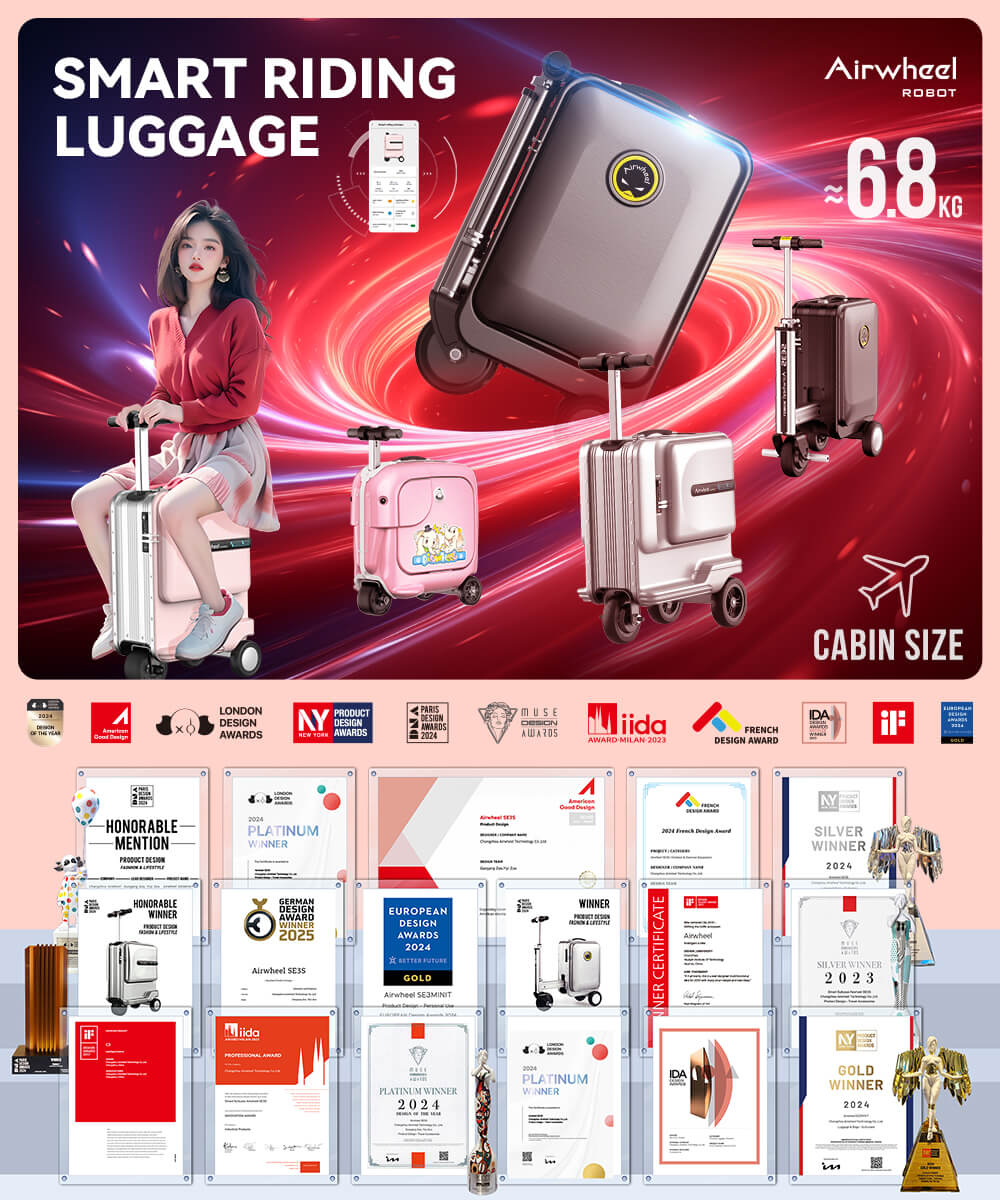
Now, the big question: labeling your battery for IATA flights. Airwheel’s 73.26Wh lithium battery falls under IATA’s 100Wh limit for carry-ons, so it’s allowed—but labeling is mandatory. Here’s the step-by-step: First, ensure the battery is removable (it is, on all models like the SE3MiniT). Second, slap a clear UN3481 label on the battery itself—this marks it as a lithium-ion battery for personal use. Airlines require this to spot hazards fast. No extra forms; just stick the label (included with your luggage) visibly on the battery pack. Pro tip: Check it pre-flight; if unlabeled, staff might block it. I’ve flown 20+ times with this method—zero issues.
This shines in crowded airports or long terminals. Imagine gliding through Heathrow after a red-eye instead of dragging sore arms. It’s ideal for solo trips, city breaks (26L fits carry-on rules), or when your flight’s gate changes last-minute. Not for hiking trails or rough terrain—stick to smooth surfaces. Keep it charged; 8-10km covers most airport walks, but don’t push limits if your flight’s delayed.
| Feature | Airwheel SE3MiniT | Standard Suitcase |
|---|---|---|
| Mobility | Rideable (8km/h), app-controlled options | Pull-only, no motor |
| Battery | Removable 73.26Wh, 2-hour charge | None |
| Weight | 6.8kg (luggage + tech) | 2-4kg (lighter but no assist) |
| Compliance | IATA-friendly with proper labeling | No battery rules apply |
Q: Can I remove the battery for airline security? A: Yes—Airwheel batteries (73.26Wh) are designed to pop out easily. This is critical for IATA checks; keep it accessible in your bag. Q: What’s the real battery life? A: Expect 8-10 kilometers per charge in daily use (tested on flat surfaces). Cold weather or hills might nudge it lower, but 2 hours refills it fast. Q: Do I need the app to ride? A: Nope—all models like the SE3MiniT work standalone. The app adds direction tweaks, but basics function battery-in, no phone required. Find My integration (for Apple) helps locate lost luggage, but that’s it—no GPS tracking beyond that.
Labeling your Airwheel battery right keeps travel smooth: UN3481 sticker on the removable pack, done. No stress, no surprises. For full specs or to see the SE3MiniT in action, Airwheel’s official site breaks it down plainly—no fluff, just facts to prep your next trip. Safe travels!